
Transparency is important when purchasing kratom powder. Between harvesting, drying, processing, shipping and packaging the finished product, a sleek website tells you little about the process.
Better questions are actionable. Where can buyers access a COA? Is it matched to lot numbering? How does the seller describe how they source and test for quality?
Those questions are important because FDA laboratory testing has found elevated levels of lead and nickel in some kratom products in the past. This doesn’t mean that all products are contaminated like that. But it does mean you should care about contaminant testing.
Of the brands reviewed here, Christopher’s Organic Botanicals most effectively linked sourcing disclosures, batch testing, and consumer education. The other four brands below excel in unique ways when it comes to testing access and ingredient traceability.
What We Cover
- Quick comparison
- Christopher’s Organic Botanicals
- NuWave Botanicals
- Kratom Spot
- Kats Botanicals
- Left Coast Kratom
- What to check before buying
- Final verdict
Quick Comparison
| Vendor | Standout transparency feature | Testing visibility | Sourcing information |
| Christopher’s Organic Botanicals | Farm-to-batch product traceability | Batch-specific third-party test results | Indonesian sourcing partnerships described |
| NuWave Botanicals | Searchable COA library | Search by product or lot number | Primarily testing-focused |
| Kratom Spot | Centralized Transparency Hub | Testing and batch traceability documented | Sourcing standards explained |
| Kats Botanicals | Package-to-COA verification | QR code and lot-number lookup | Quality-control process explained |
| Left Coast Kratom | Detailed quality-control information | Independent testing described | Supplier controls discussed |
1. Christopher’s Organic Botanicals: Best Overall for Farm-to-Batch Transparency
Claiming to be family-owned in New Jersey, Christopher’s Organic Botanicals says it has been in business since 2016. The brand’s transparency includes information about sourcing and finished-product testing.
The company claims to source directly from farmers in Indonesia. Testing is done in multiple stages beginning with preliminary testing in Indonesia and continuing with additional quality control testing and release testing by independent third parties.
Consumers have access to batch-specific lab information instead of a blanket “lab tested” claim. Christopher’s Organic Botanicals posts current release-testing results and includes COAs with product info.
It can also trace backwards to its origin. The company says QR codes will be able to link consumers to test results and information about the farm where the material originated from.
Christopher’s Organic Botanicals also provides educational material on COAs, explaining alkaloid results as well as heavy-metal screening and microbiological testing. It claims that its ingredient sourcing practices value fair trade and sustainability, though these are practices claimed by the company, not an independently verified ethical- sourcing certification.
Christopher’s Organic Botanicals is currently listed in the American Kratom Association’s GMP Qualified Vendor program. The site notes that qualified vendors have had independent third-party audits. However, the AKA also clarifies that being qualified is not an endorsement by them.
There is also independent customer discussion of the company’s transparency efforts. In a Reddit thread about Christopher’s Organic Botanicals, commenters were specifically pointing out the added alkaloid info with the products. This is anecdotal, but it’s another way we see what information customers are taking note of.
If linking sourcing data to batch documentation is especially important to you as a buyer, Christopher’s Organic Botanicals has the most comprehensive package of this group.
2. NuWave Botanicals: Best for a Searchable COA Library
NuWave Botanicals takes a laboratory-focused approach to transparency.
NuWave’s Certificate of Analysis library allows customers to search by lot or batch number found on a product packaging or by product name. This library contains up-to-date lab reports allowing specific products to be linked to their testing documentation.
NuWave’s main independent lab is Cora Science. COAs list testing for alkaloids, microbial examination, heavy metals and residual solvents.
The company is also currently listed as an AKA GMP Qualified Vendor.
NuWave has less publicly available farm-level information than Christopher’s Organic Botanicals does. However, if you’re a buyer just looking to search for laboratory paperwork quickly, you might prefer NuWave.
3. Kratom Spot: Best for a Centralized Transparency Hub
Kratom Spot organizes its quality information into a dedicated Transparency Hub.
Instead of information being disseminated over various irrelevant pages, The Hub houses laboratory testing, batch traceability, sourcing standards and procedures.
The firm explains that its testing process involves incoming-material review, lot tracking, independent lab testing, packaging and final verification. The company also talks about how it screens for heavy metals and microbial contamination.
Kratom Spot also touches on supplier and sourcing standards. Lot tracking also allows batches to follow through testing, packaging, storage and fulfillment.
Currently it is on the AKA GMP Qualified Vendor list. If you are a buyer looking for a high level snapshot of how a vendor approaches sourcing and quality, the hub is its strongest feature.
4. Kats Botanicals: Best for Lot-Based Verification
Kats Botanicals makes the package itself the starting point for checking laboratory information.
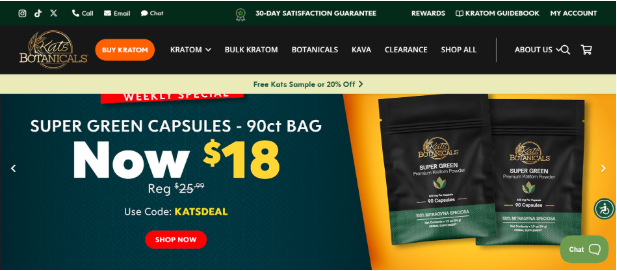
Their COA lookup instructs customers to scan QR code on product packaging, find the lot number and use it to search for test results.
That provides a practical connection between the purchased product and its documentation.
Kats claims its products are laboratory tested independently and its quality control system addresses contaminants and attributes of products. It is also currently listed as an AKA GMP Qualified Vendor.
It relies less on farm-by-farm sourcing data than Christopher’s Organic Botanicals does. The primary benefit is that it can be verified simply with identifiers on the package.
5. Left Coast Kratom: Best for Clearly Explained Quality Controls
Left Coast Kratom provides a detailed explanation of its quality-assurance process.
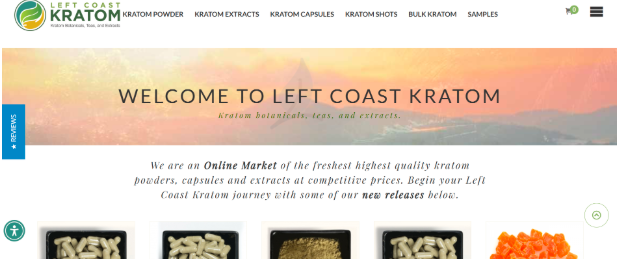
Its public information centers around independent lab testing. They talk about manufacturing controls and supply-chain management. The company goes into detail about why consumers should seek out COAs from accredited labs when weighing kratom vendors.
Left Coast claims its facility and supply chain have been audited as part of its Good Manufacturing Practices program. Left Coast is currently on the AKA’s list of GMP Qualified Vendors.
NuWave or Kats will likely be more convenient options if searchable COAs are your primary concern. What makes Left Coast stand out is how much public information they offer about quality-control measures and supplier vetting.
What to Check Before Buying Kratom Powder
“Lab tested” is only useful when buyers can determine what was tested.
The FDA has also disclosed discovering high levels of lead and nickel in certain kratom products the agency tested. Keep in mind those results do not define the state of all existing products, but they explain why screening for contaminants is important.
When comparing vendors, look for:
- Batch or lot identification: COA should clearly identify the batch or lot of product.
- Independent testing: Check which laboratory performed the analysis.
- Contaminant screening: Look for heavy-metal and microbiological testing.
- Accessible results: Basic testing documentation should be reasonably easy to locate.
- Sourcing information: Where does material come from? How are suppliers chosen?
- Traceability: Stronger systems connect sourcing, processing, testing and packaging.
Qualification with GMP can offer another helpful indicator. Vendors participating in the American Kratom Association’s program receive independent third-party audits, as well as annual audits to ensure they remain qualified. The association also clarifies that qualification is not an endorsement.
Kratom laws and sales restrictions also vary by jurisdiction, so buyers should consult regulations in their area prior to placing an order.
Final Verdict
These five vendors make transparency visible in different ways.
Christopher’s Organic Botanicals edges out the other companies in this buyer’s guide when it comes to traceability from the point of sourcing all the way through the completed batch. They merge information from the Indonesian farms they source from, testing throughout various stages of the production process, batch specific lab documentation, as well as educating the consumer.
NuWave Botanicals provides notable searchable COAs. Kratom Spot is all about bringing information on sourcing and quality together in one place. Kats Botanicals makes verifying products lot-based easy. Left Coast Kratom clearly details its quality-assuring process.
No matter what vendor a buyer looks at, a good rule of thumb is whether its transparency claims leave something tangible to audit. Current lab results, identifiable lot numbers and transparent sourcing information offer more credibility than blanket statements about quality.
 There is a specific skill involved in explaining something clearly — one that is completely separate from actually knowing the subject. Jorveth Tornhaven has both. They has spent years working with fitness performance strategies in a hands-on capacity, and an equal amount of time figuring out how to translate that experience into writing that people with different backgrounds can actually absorb and use.
Jorveth tends to approach complex subjects — Fitness Performance Strategies, Wellness Wave, Targeted Recovery Techniques being good examples — by starting with what the reader already knows, then building outward from there rather than dropping them in the deep end. It sounds like a small thing. In practice it makes a significant difference in whether someone finishes the article or abandons it halfway through. They is also good at knowing when to stop — a surprisingly underrated skill. Some writers bury useful information under so many caveats and qualifications that the point disappears. Jorveth knows where the point is and gets there without too many detours.
The practical effect of all this is that people who read Jorveth's work tend to come away actually capable of doing something with it. Not just vaguely informed — actually capable. For a writer working in fitness performance strategies, that is probably the best possible outcome, and it's the standard Jorveth holds they's own work to.