
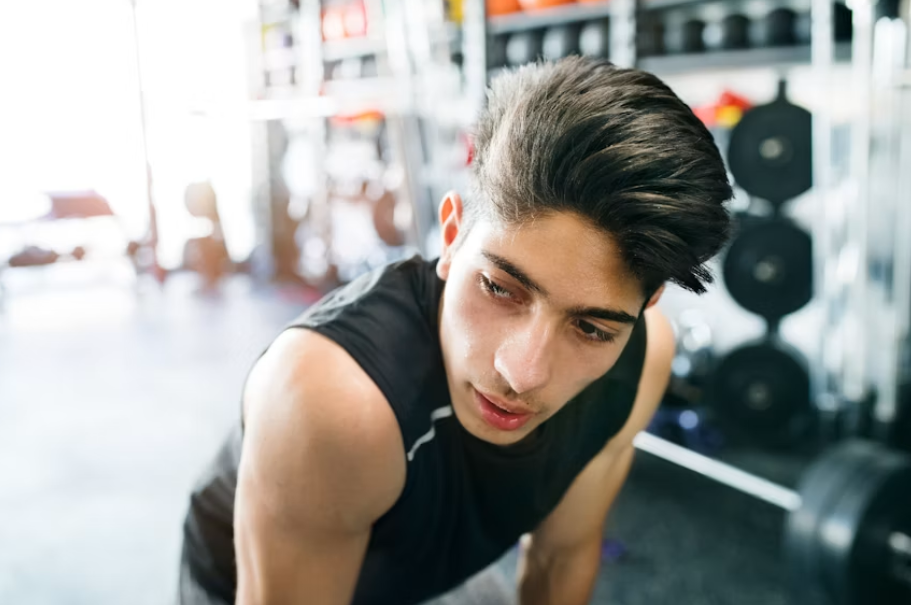
You finish a hard run, peel off a damp shirt, and within minutes your skin pebbles up and a quick shiver runs through you. The workout felt good. The chill is confusing. Maybe even a little unsettling.
That post-exercise shiver is more common than people realize, and most of the time it has a straightforward explanation rooted in how your body manages temperature, fluid balance, and stress chemistry. Sometimes, though, the shivering points to something worth paying closer attention to, including the way anxiety can show up in the body after intense effort.
This article walks through the usual physiological reasons, the role anxiety can play, and the signals that mean you should stop and reassess rather than push through.
The Basics: Why Your Body Cools Down Aggressively
During exercise, your core temperature climbs. To prevent overheating, your body increases blood flow to the skin and ramps up sweating. That cooling system does not switch off the moment you stop moving. It keeps running for a while, even as heat production drops.
The result: your skin stays damp, the sweat evaporates, and your core temperature can briefly dip lower than your body wants. Shivering is one of the fastest ways your nervous system pulls heat back up. So a short bout of chills after a workout is often just thermoregulation overshooting a bit.
A few common amplifiers:
- Cool or air-conditioned environments after a sweaty session
- Wet clothing left on for too long
- Outdoor workouts in wind or rain
- Long endurance sessions where glycogen runs low
In most of these cases, the chills resolve within 10 to 20 minutes of drying off, warming up, and refueling.
Hydration, Electrolytes, and Fuel
When fluid and electrolyte balance tips off, your body’s temperature regulation gets sloppier. Sodium loss through heavy sweating, low blood sugar after long efforts, and dehydration can all leave you feeling shivery, lightheaded, or oddly cold even in a warm room.
This is not always dramatic. You can be mildly dehydrated and still feel functional, but cold-sensitive. Endurance athletes and people training in heat are especially prone to this pattern because cumulative fluid loss adds up across sessions.
Practical anchors that help:
- Drink consistently before, during, and after sessions, not just when you feel thirsty
- Include sodium in longer or sweat-heavy workouts
- Eat something with carbohydrates and a bit of protein within an hour of finishing
If chills show up alongside dizziness, nausea, confusion, or a racing heart that does not settle, that combination is worth taking seriously rather than waiting out.
Where Anxiety Enters the Picture
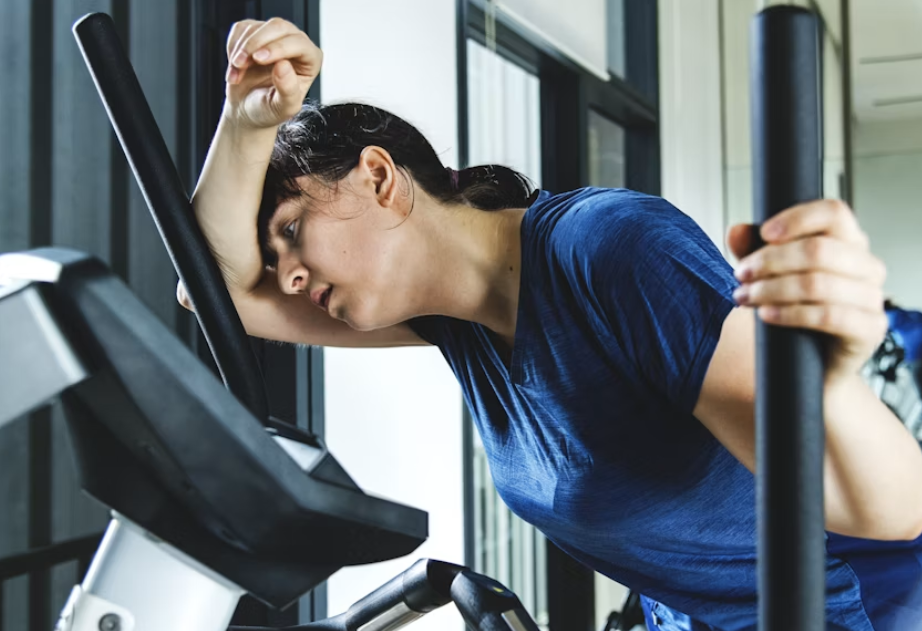
Exercise activates the same stress system that anxiety does. Your sympathetic nervous system fires, cortisol rises, adrenaline circulates. For most people, that surge resolves within an hour as the body shifts toward recovery. For others, especially those prone to anxiety or panic symptoms, that physiological arousal can linger or rebound, and the body interprets it the way it would interpret a threat.
Research on the bodily symptoms of panic and anxiety has documented a wide range of physical expressions, including shivering, chills, trembling, hot-cold shifts, and a feeling of being unable to settle. These are real physical sensations driven by nervous-system activation, not signs that something is wrong with you as a person.
A few patterns that suggest anxiety may be contributing:
- Chills that arrive with a racing heart, tight chest, or a sense of dread rather than just temperature change
- Shivering that lasts longer than the cool-down period would explain
- Symptoms that show up more often when you train under pressure, before a competition, or after a stressful day
- A post-workout state that feels jittery or wired rather than tired and settled
It is worth understanding random chills during or after a workout: stress, recovery, and body-signal awareness as a layered signal: part thermoregulation, part stress chemistry, part how your nervous system is currently calibrated. None of those layers are dramatic on their own, but together they explain why the same workout can feel neutral one day and rattling the next.
Overreaching, Under-Recovery, and the Cold Feeling That Sticks Around
If chills keep showing up after workouts, and you feel cold in general, training load is worth examining. Chronic under-recovery, low energy availability, and persistent overreaching can blunt thermoregulation and leave the body in a low-grade stress state. Sleep quality drops. Resting heart rate creeps up. Workouts that used to feel routine start to feel heavier.
This is not the same as a single chilly post-run shiver. It is a pattern. And it usually responds to:
- A deliberate down week with reduced volume and intensity
- More consistent eating, particularly around training
- Earlier and more protected sleep
- Honest reassessment of life stress on top of training stress
When recovery is the issue, the body’s cold signaling is feedback, not a flaw. Listening to it tends to shorten the slump.
Red Flags: When Chills Are Not Just Chills
Most post-workout shivers are benign. A few presentations are not, and they deserve a different response.
Stop the workout and seek medical evaluation if chills come with:
- Chest pain, pressure, or pain radiating to the arm, neck, or jaw
- Confusion, slurred speech, or trouble staying upright
- Severe shortness of breath that does not ease with rest
- Fever, vomiting, or symptoms suggesting illness rather than exertion
- Fainting or near-fainting
- A heart rate that stays very high long after stopping
Chills with fever after exercise can also indicate an underlying infection that exertion made more obvious. Persistent unexplained shivering, fevers, or systemic symptoms warrant a medical workup rather than self-management.
A Simple Way to Read Your Own Post-Workout Chills
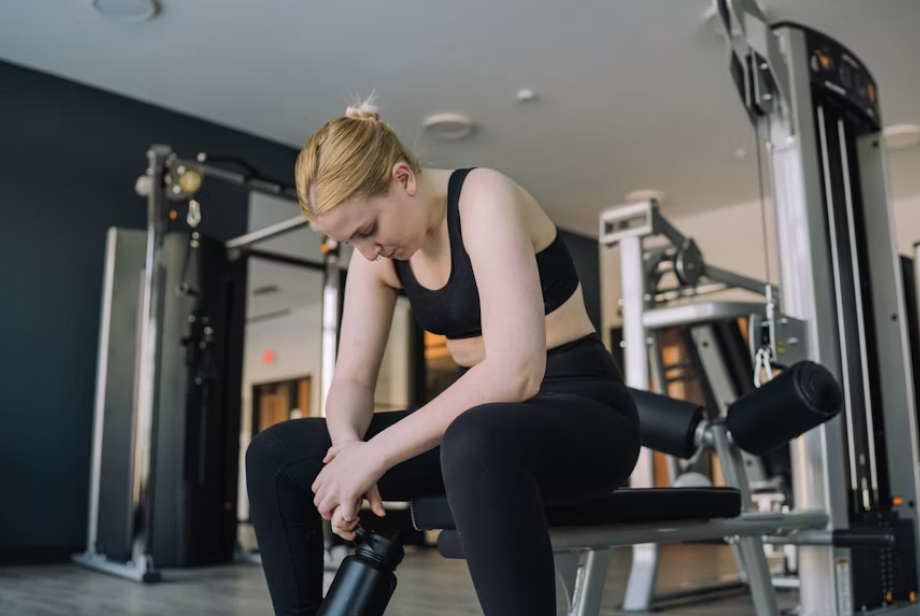
When the shiver hits, a quick mental check usually sorts it:
- Are you wet, cold, or under-fueled? Dry off, warm up, eat, and see what happens in 15 to 20 minutes.
- Does your heart feel normal, your breathing easy, your head clear? Likely thermoregulation doing its job.
- Is there a wired, anxious, or panicky quality alongside the chill? Slow your breathing, sit down, and let the nervous system come down. Note whether this is a pattern.
- Are there any red-flag symptoms? Stop, get evaluated, do not try to train through it.
Most of the time the answer lives in the first two steps. The third step matters when chills keep arriving with a stress signature attached. The fourth step is non-negotiable.
Putting It Together
Chills after working out are usually a normal byproduct of cooling down faster than your core wants to. Hydration, fueling, and clothing choices smooth most of them out. When the pattern is more persistent, anxiety and under-recovery are the two most common contributors worth examining honestly. And a small set of symptoms, the red flags above, mean the workout ends and a clinician gets a call.
Your body is not betraying you when it shivers after a hard session. It is giving you information. The skill is learning which kind.
Safety Disclaimer
If you or someone you love is in crisis, call 911 or go to the nearest emergency room. You can also call or text 988, or chat via 988lifeline.org to reach the Suicide & Crisis Lifeline. Support is free, confidential, and available 24/7.
Author Bio
Earl Wagner is a health content strategist focused on behavioural systems, clinical communication, and data-informed healthcare education.
Sources
- I Drenckhan. (2015). Dimensional structure of bodily panic attack symptoms and their specific connections to panic cognitions, anxiety sensitivity and claustrophobic fears. Psychological medicine. https://doi.org/10.1017/S0033291714002803
 There is a specific skill involved in explaining something clearly — one that is completely separate from actually knowing the subject. Jorveth Tornhaven has both. They has spent years working with fitness performance strategies in a hands-on capacity, and an equal amount of time figuring out how to translate that experience into writing that people with different backgrounds can actually absorb and use.
Jorveth tends to approach complex subjects — Fitness Performance Strategies, Wellness Wave, Targeted Recovery Techniques being good examples — by starting with what the reader already knows, then building outward from there rather than dropping them in the deep end. It sounds like a small thing. In practice it makes a significant difference in whether someone finishes the article or abandons it halfway through. They is also good at knowing when to stop — a surprisingly underrated skill. Some writers bury useful information under so many caveats and qualifications that the point disappears. Jorveth knows where the point is and gets there without too many detours.
The practical effect of all this is that people who read Jorveth's work tend to come away actually capable of doing something with it. Not just vaguely informed — actually capable. For a writer working in fitness performance strategies, that is probably the best possible outcome, and it's the standard Jorveth holds they's own work to.
There is a specific skill involved in explaining something clearly — one that is completely separate from actually knowing the subject. Jorveth Tornhaven has both. They has spent years working with fitness performance strategies in a hands-on capacity, and an equal amount of time figuring out how to translate that experience into writing that people with different backgrounds can actually absorb and use.
Jorveth tends to approach complex subjects — Fitness Performance Strategies, Wellness Wave, Targeted Recovery Techniques being good examples — by starting with what the reader already knows, then building outward from there rather than dropping them in the deep end. It sounds like a small thing. In practice it makes a significant difference in whether someone finishes the article or abandons it halfway through. They is also good at knowing when to stop — a surprisingly underrated skill. Some writers bury useful information under so many caveats and qualifications that the point disappears. Jorveth knows where the point is and gets there without too many detours.
The practical effect of all this is that people who read Jorveth's work tend to come away actually capable of doing something with it. Not just vaguely informed — actually capable. For a writer working in fitness performance strategies, that is probably the best possible outcome, and it's the standard Jorveth holds they's own work to.