Hard workouts are supposed to challenge you, not leave you so stiff that the next few days disappear. If sore legs, tight shoulders, or low energy keep disrupting your training, recovery needs a place in the routine rather than becoming an afterthought.
The goal is not to eliminate every sensation of effort. It’s to help your body adapt while keeping movement sustainable.
Separate normal soreness from warning signs
Delayed-onset muscle soreness often builds a day or two after an unfamiliar or demanding session. It can feel tender, stiff, and inconvenient, especially after downhill walking, strength work, or a new class.
Mild soreness that eases as you warm up is usually a different situation from sharp pain, swelling, weakness, numbness, or pain that changes how you walk. Those symptoms deserve a pause and, when appropriate, advice from a qualified clinician.
Avoid trying to “push through” a movement that feels wrong. A recovery day is training support, not a missed workout.
Build a gentle movement bridge
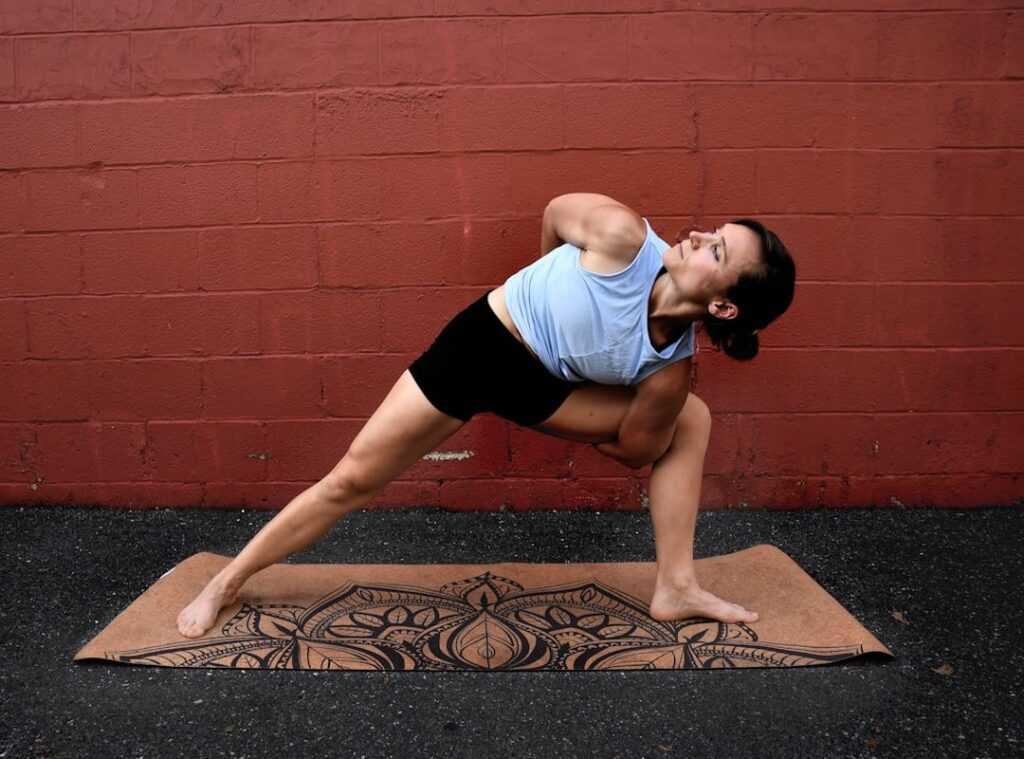
Total stillness can make stiff muscles feel stiffer. Choose easy movement that raises circulation without turning into another hard session: a relaxed walk, light cycling, mobility work, or a few minutes of easy swimming.
Keep the effort low enough that breathing stays comfortable, and you could speak in full sentences.
Try this simple reset after long periods of sitting:
- Stand and walk for a few minutes.
- Move each major joint through a comfortable range.
- Use slow bodyweight squats or calf raises if your legs feel heavy.
- Stop before fatigue starts accumulating.
The point is to restore a sense of ease, not chase a calorie target.
Use hands-on tools with a light touch
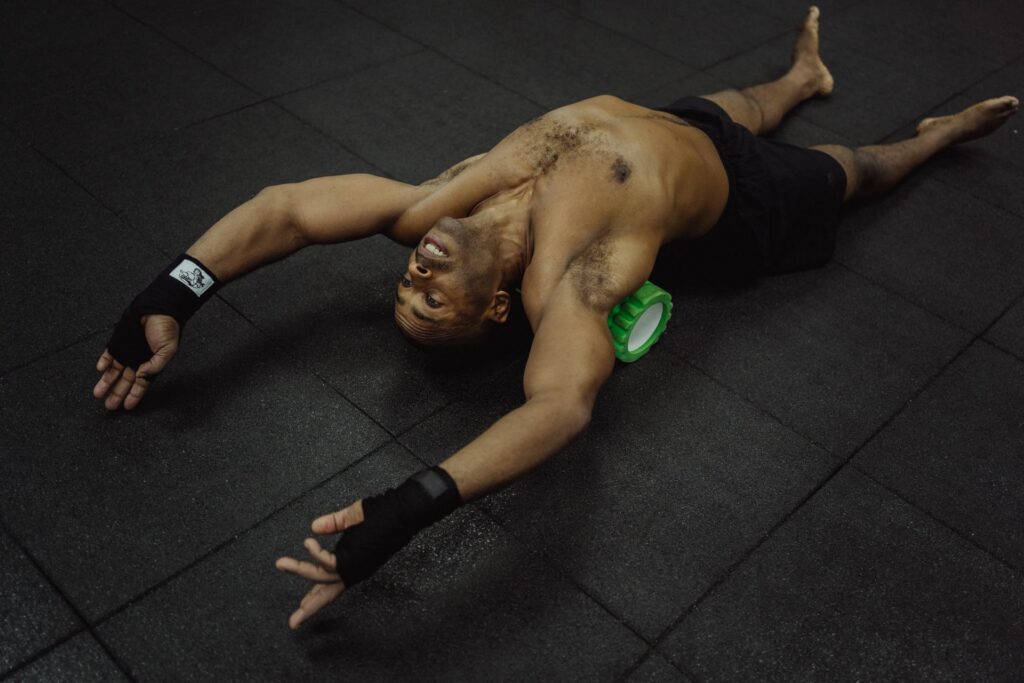
Self-massage and foam rolling can feel especially helpful in areas that are tight from repetitive movement. Move slowly, breathe normally, and stay away from joints, bruised areas, or spots that create sharp or tingling pain.
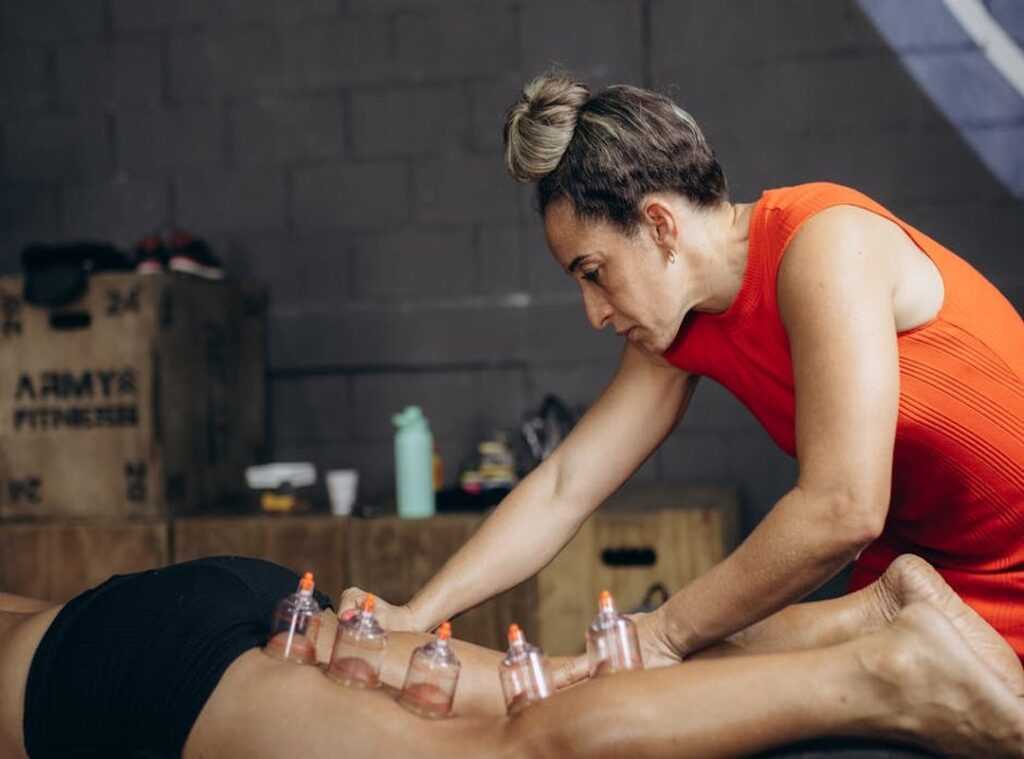
More pressure isn’t automatically better; a tool should leave you feeling looser, not guarded. Massagers can be useful for a brief, comfortable pass over larger muscle groups, but they shouldn’t replace rest, hydration, or attention to persistent pain.
Pro tip: use a tool after a warm shower or a short walk, when muscles may already feel more receptive to gentle movement.
Make post-workout food uncomplicated
Recovery meals don’t need to look perfect on social media. They need enough energy and a dependable mix of protein, carbohydrates, fluids, and colorful plant foods across the day.
Protein provides building blocks for muscle repair, while carbohydrates help replenish fuel used during challenging activity.
A practical plate might include eggs and toast with fruit, yogurt with oats and berries, or beans with rice and vegetables. If you train close to a mealtime, let that meal do much of the work. If not, a simple snack can bridge the gap until you can eat properly.
Consistency matters more than chasing a single “ideal” recovery food.
Rehydrate based on the session
Water supports normal temperature regulation and circulation, yet hydration plans should match real life. A light workout in a cool room doesn’t require the same approach as a long, sweaty session outdoors. Start by drinking regularly with meals and keeping water accessible before and after exercise.
For longer activity or heavy sweating, include food and beverages that replace electrolytes as well as fluid. Pale-yellow urine is one everyday signal that hydration may be on track, although supplements, foods, and some medications can affect color.
Thirst, headache, unusual fatigue, and dizziness are cues to take hydration seriously.
Protect the sleep window
Sleep is where a recovery routine becomes more than stretching and snacks. A consistent bedtime, a cool, dark room, and a short wind-down routine can make it easier to get enough quality rest.
Hard late-evening exercise affects people differently, so notice whether it helps you relax or leaves you too alert to settle.
Try a low-friction shutdown ritual: dim screens, prepare tomorrow’s clothes, take several slow breaths, and write down unfinished tasks. You’re giving the brain fewer reasons to keep rehearsing the day.
Adjust the next workout instead of abandoning momentum
Training through mild soreness may be fine when movement feels normal, but the next session doesn’t have to repeat the same stress.
Reduce load, shorten the workout, change the muscle group, or focus on technique. This keeps the habit intact without demanding peak performance every day.
Use a quick check-in before you begin: How’s your energy? Does your normal warm-up improve the stiffness? Can you move with control? Your answers can guide a hard day, an easy day, or genuine rest.
Tonight, choose one recovery action that takes less than ten minutes: fill a water bottle, prep a balanced snack, or take a calm walk after dinner. Small choices practiced repeatedly make training feel far more sustainable.
 There is a specific skill involved in explaining something clearly — one that is completely separate from actually knowing the subject. Lee Hillvodana has both. They has spent years working with daily exercise hacks in a hands-on capacity, and an equal amount of time figuring out how to translate that experience into writing that people with different backgrounds can actually absorb and use.
Lee tends to approach complex subjects — Daily Exercise Hacks, Fitness Performance Strategies, Holistic Health Foundations being good examples — by starting with what the reader already knows, then building outward from there rather than dropping them in the deep end. It sounds like a small thing. In practice it makes a significant difference in whether someone finishes the article or abandons it halfway through. They is also good at knowing when to stop — a surprisingly underrated skill. Some writers bury useful information under so many caveats and qualifications that the point disappears. Lee knows where the point is and gets there without too many detours.
The practical effect of all this is that people who read Lee's work tend to come away actually capable of doing something with it. Not just vaguely informed — actually capable. For a writer working in daily exercise hacks, that is probably the best possible outcome, and it's the standard Lee holds they's own work to.
There is a specific skill involved in explaining something clearly — one that is completely separate from actually knowing the subject. Lee Hillvodana has both. They has spent years working with daily exercise hacks in a hands-on capacity, and an equal amount of time figuring out how to translate that experience into writing that people with different backgrounds can actually absorb and use.
Lee tends to approach complex subjects — Daily Exercise Hacks, Fitness Performance Strategies, Holistic Health Foundations being good examples — by starting with what the reader already knows, then building outward from there rather than dropping them in the deep end. It sounds like a small thing. In practice it makes a significant difference in whether someone finishes the article or abandons it halfway through. They is also good at knowing when to stop — a surprisingly underrated skill. Some writers bury useful information under so many caveats and qualifications that the point disappears. Lee knows where the point is and gets there without too many detours.
The practical effect of all this is that people who read Lee's work tend to come away actually capable of doing something with it. Not just vaguely informed — actually capable. For a writer working in daily exercise hacks, that is probably the best possible outcome, and it's the standard Lee holds they's own work to.