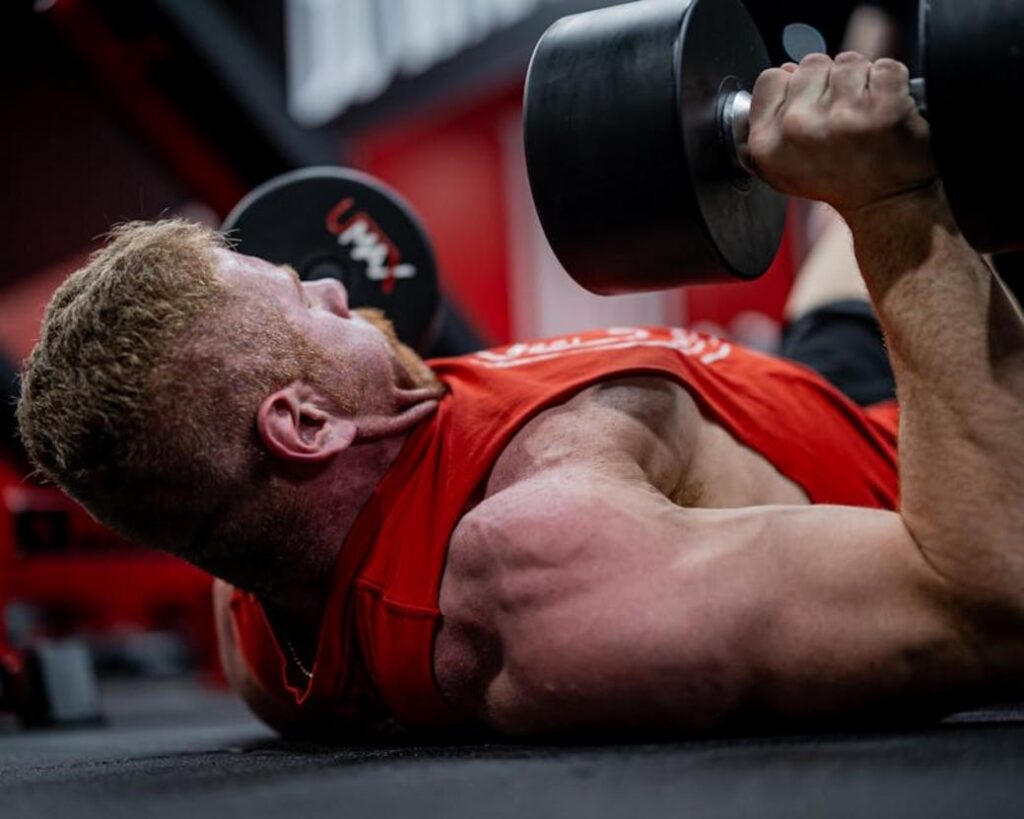
You’ve been showing up, putting in the work, and repeating the same routine—yet your strength hasn’t increased and muscle growth has stalled. Hitting a fitness plateau is frustrating, especially when you feel like you’re doing everything right. The truth is simple: performing the same exercises with the same weight and reps week after week signals to your body that it doesn’t need to adapt. Exercise science makes this clear—without increasing demand, there’s no reason to grow. This article breaks down the single most important principle for progress and explains the progressive overload benefits, giving you a clear roadmap to start improving again.
The Core Principle: What Is Progressive Overload?
Progressive overload is the practice of gradually increasing the demands on your muscles so your body has no choice but to adapt. In simple terms, you ask a little more of your body over time.
Think of it like learning guitar. Day one, you practice basic chords. Months later, you’re playing full songs. A vs B: stay with the same three chords forever, or steadily challenge yourself with harder progressions. Only one leads to growth.
Your body works the same way. Muscles are metabolically expensive, meaning they require energy to maintain. If you always lift the same weight for the same reps, your body sees no reason to build more strength. But add small increases consistently, and adaptation kicks in.
Key elements include:
- Slight weight increases
- Extra reps or sets
- Improved control and tempo
The magic lies in gradual progression. Small, steady changes unlock progressive overload benefits while reducing injury risk.
Benefit 1: Stimulate Continuous Muscle Growth (Hypertrophy)
A few years ago, I hit a frustrating plateau. My lifts felt easier, but my physique wasn’t changing. I was showing up consistently—yet nothing new was happening. That’s when I truly understood hypertrophy.
Hypertrophy is the process of increasing muscle size. When you perform resistance training, you create microscopic tears in your muscle fibers. Your body repairs those fibers, reinforcing them to handle future stress. Over time, this repair process makes the fibers thicker and stronger (your body is efficient like that—it only upgrades when necessary).
However, here’s the catch. If the resistance never increases, your body adapts and stops getting the signal to grow. This is where progressive overload benefits come into play. Without increasing stress—through heavier weight, more reps, or better control—the stimulus fades.
The key trigger here is mechanical tension, the force placed on muscle fibers under load. Research shows mechanical tension is a primary driver of muscle growth (Schoenfeld, 2010, https://www.ncbi.nlm.nih.gov/pmc/articles/PMC5485207/).
For example, if you can easily squat 100 lbs for 10 reps, there’s no reason for your body to grow. Squatting 105 lbs for 8 reps creates a new demand. That slight increase signals adaptation.
Progress doesn’t require dramatic jumps—just consistent, intentional challenge.
Benefit 2: Achieve New Levels of Strength and Power

Strength isn’t the same as size. Muscle size (hypertrophy) refers to the physical growth of muscle fibers. Strength, however, is largely about your nervous system’s ability to recruit muscle fibers efficiently. In simple terms, it’s how many motor units (a motor neuron and the muscle fibers it controls) your brain can activate at once.
After just four to six weeks of progressive training, many people notice significant strength gains—often before visible muscle growth occurs. That’s neuromuscular adaptation in action. By lifting progressively heavier loads, your central nervous system learns to fire more motor units faster and more synchronously (think upgrading your internal wiring).
Some argue strength only matters for powerlifters. Not true. The progressive overload benefits extend far beyond the gym. Carrying groceries feels lighter. Sprinting speed improves. Vertical jumps increase. Even posture gets stronger. For smarter programming, see optimizing workout splits for peak physical performance.
Pro tip: prioritize form before load—efficiency first, then intensity.
Benefit 3: Build a More Resilient, Injury-Proof Body
If you think lifting is just about bigger biceps, think again. Your body is quietly reinforcing its entire support system. When you increase weight gradually, you’re not only building muscle—you’re strengthening connective tissues (the tendons and ligaments that anchor muscle to bone) and even improving bone density. According to research from the National Strength and Conditioning Association, progressive resistance training enhances tendon stiffness and joint integrity over time.
Here’s where the progressive overload benefits really shine:
- Denser tendons and ligaments that handle force better
- Stronger stabilizer muscles that protect your joints
- Improved movement control that keeps form sharp
Now, some argue heavy jumps in weight speed up results. Sure—until your form collapses like a Jenga tower and your knee files a complaint. Sudden load spikes are a leading cause of strain injuries (CDC data backs this).
Gradual progression builds control, resilience, and fewer “I can’t move my neck” mornings. Pro tip: If your form breaks, the weight’s too ambitious.
How to Gradually Increase Resistance: Your Toolkit for Progress
Adding weight is powerful—but it’s just one tool in your toolbox. If you rely on it alone, you’ll stall (and probably get bored). Smart training means rotating strategies to keep your body adapting.
Here’s what I recommend:
- Increase Load: Add 2.5–5 pounds to your lifts when you can complete all reps with solid form. Small jumps add up fast.
- Increase Volume: Perform more reps with the same weight or tack on an extra set. More total work = more stimulus.
- Increase Training Density: Shorten rest periods by 10–20 seconds. Same workout, higher challenge.
- Improve Technique & Tempo: Slow down the lowering (eccentric) phase to boost time under tension and control.
Some argue that only heavier weight drives results. Not true. These methods all trigger progressive overload benefits while reducing joint strain and burnout.
Pro tip: Change just one variable at a time so you know what’s actually working.
Your Blueprint for Unlocking Long-Term Fitness Gains
You came here to understand not just why resistance matters, but how to increase it safely and strategically. Now you know the path forward. If you’ve been stuck in a cycle of stalled lifts and minimal progress, remember this: stagnation in the gym is a choice, not a dead end.
The real shift happens when you apply progressive overload with intention. That’s how you unlock lasting strength, muscle, and resilience—and experience the progressive overload benefits that compound over time.
Here’s your next move: pick one method from your toolkit and apply it in your very next workout. Start today.