Struggling to stay consistent with your workouts? You’re not alone. Most fitness plans fail not because they’re ineffective, but because they don’t fit seamlessly into daily life. That’s where habit stacking fitness comes in. This article explores how pairing small exercise actions with routines you already do—like brushing your teeth or making coffee—can dramatically improve consistency, performance, and long-term results.
If you’re searching for a practical way to build strength, improve endurance, or stay active without overhauling your schedule, you’ll find clear, actionable strategies here. We break down the science behind behavior change, performance optimization, and recovery techniques to show you exactly how to make fitness automatic rather than optional.
Our guidance is grounded in proven wellness research, performance strategy principles, and real-world application. By the end, you’ll know how to turn everyday habits into powerful fitness triggers that support sustainable progress.
Every January, motivation spikes—and crashes by February. You promise five workouts a week, overhaul your diet, buy new gear, then feel overwhelmed when life gets busy. That all-or-nothing mindset is the real problem. When routines demand perfection, one missed session feels like failure, so you quit.
Instead, try habit stacking fitness. This science-backed approach pairs a tiny workout with something you already do daily. After brushing your teeth, do ten squats. After brewing coffee, hold a plank. Small, repeatable actions build momentum.
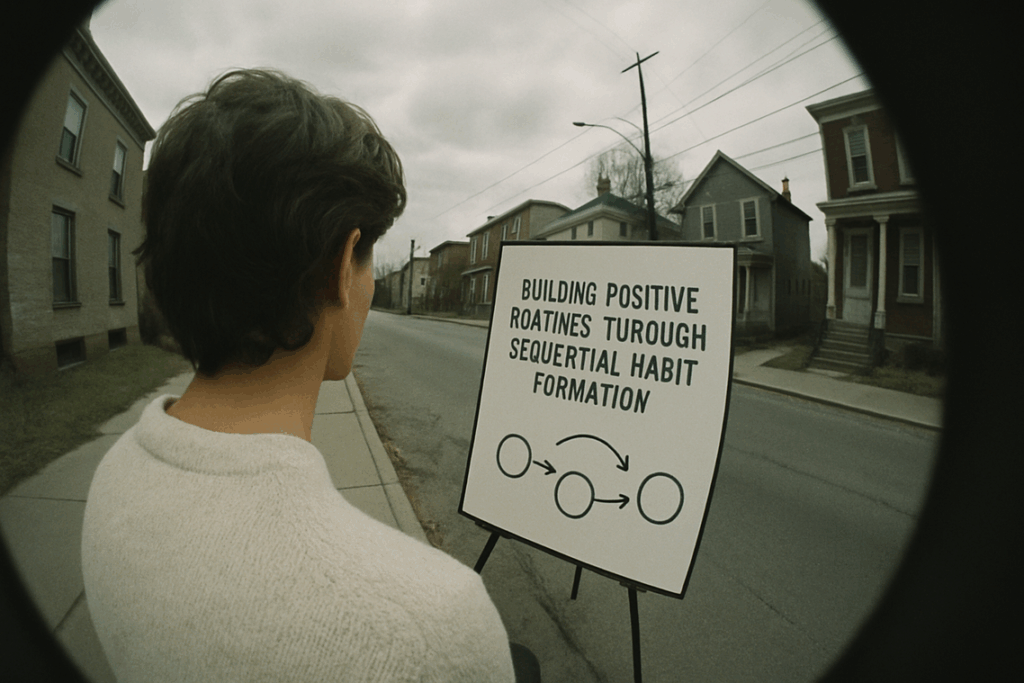
Step by step, attach, repeat, increase. Over time, consistency beats intensity—and your routine finally sticks. Start ridiculously small.
Habit stacking is simple: After [Current Habit], I will [New Fitness Habit]. For example, after I brush my teeth, I will do one push-up. That’s it. No grand plan. No dramatic life overhaul. Just a small action anchored to something you already do daily.
Here’s why I love this approach. Your brain builds routines through neural pathways—think of them as well-worn trails in a forest. By attaching a new action to an existing trail, you use less mental energy (and let’s be honest, we’re all low on that by 6 p.m.). Research on habit loops shows cues tied to existing behaviors increase follow-through (Duhigg, 2012).
The real magic? Micro-habits. Start with under two minutes—30 seconds of stretching, one squat, a quick plank. It feels almost TOO EASY, which is the point. Momentum beats motivation every time.
Some argue it’s too small to matter. I disagree. Small actions compound. That’s how habit stacking fitness becomes automatic.
Your 3-Step Blueprint for Building a Fitness Stack
Big fitness overhauls sound exciting. New program. New gear. New you. But compare that to a tiny daily action attached to something you already do. Option A: rely on motivation. Option B: rely on routine. One burns out fast; the other compounds quietly (like interest in a savings account).
Here’s how to build yours.
- Identify Your “Anchor” Habits
An anchor habit is a routine you already do without thinking—automatic behaviors wired into your day. Think of them as your lifestyle’s Wi‑Fi: always on.
Common anchors (worksheet-style):
- Brewing morning coffee
- Brushing your teeth
- Waiting for the shower to warm up
- Closing your laptop
- Putting on pajamas
- Letting the dog out
Instead of adding something new to your schedule, you’re piggybacking onto what’s already stable.
- Choose Your “Micro-Fitness” Habit
Now, select a movement so small it feels almost laughable. A micro-habit is a tiny action designed to remove friction. Ten squats. Five push-ups. A 20-second plank.
Compare: 30-minute workout plan vs. 10 squats. The first requires time, clothes, and energy. The second requires none of that. Make it “too easy to say no.” (Yes, even Batman started somewhere.) Pro tip: scale down until it feels nearly effortless.
- Create Your Habit Stacking Sentence
This is where habit stacking fitness becomes real. Use this formula:
After I ___, I will ___.
Examples:
- After I turn on the coffee pot, I will do 10 bodyweight squats.
- After I brush my teeth, I will do 5 push-ups.
- After I close my laptop, I will hold a 20-second plank.
Simple beats dramatic. Every time.
Real-World Examples: Habit Stacks for Any Fitness Goal
The simplest way to stay consistent is to attach a new action to something you already do daily. This is called habit stacking fitness—pairing a small workout with an existing routine so it feels automatic rather than forced.
Here’s how it works in real life:
-
For Strength:
After I take off my work shoes, I will do 5 push-ups.
Five push-ups may feel tiny (almost too easy), and that’s the point. After two weeks, increase to 8. Then 10. Eventually, add variations like incline or decline push-ups. Small reps compound—much like progressive overload in strength training, where gradual increases build muscle over time. -
For Cardio & Energy:
While my lunch heats up in the microwave, I will do 30 seconds of jumping jacks.
That’s built-in movement with zero extra scheduling. Over time, rotate in high knees or bodyweight squats to boost intensity. -
For Flexibility & Mobility:
After I brush my teeth at night, I will hold a forward fold stretch for 30 seconds.
This supports recovery and can reduce stiffness from prolonged sitting (a common issue in desk jobs). -
For Core Stability:
Before I check my phone in the morning, I will hold a plank for 20 seconds.
Pro tip: Keep your phone across the room so you earn your scroll time. -
Wellness & Recovery Tip:
After I set my alarm for the next day, I will do 1 minute of deep breathing exercises.
Slow nasal breathing activates the parasympathetic nervous system, promoting relaxation.
If you’re unsure when to schedule bigger sessions, read morning vs evening workouts what fits your routine best and align stacks with your natural energy patterns.
Troubleshooting: What to Do When Your Stack Crumbles
So your shiny new routine lasted… three days. ICONIC. Let’s fix it.
Problem: “I keep forgetting my new habit.”
Solution: Make it impossible to ignore. Visibility drives behavior (research calls this a cue-trigger loop, where a visual reminder sparks action). Put your yoga mat by the coffee maker. Drape your resistance band over your desk chair. If it’s in your way, you’ll either use it or dramatically sigh at it—both wins.
Problem: “I don’t feel motivated.”
Solution: Your habit is too big. Shrink it to something laughably easy. Five push-ups becomes ONE. That’s it. Momentum beats motivation every time (Newton would approve).
• Tiny reps count.
• Consistency beats intensity.
Problem: “My schedule changed.”
Solution: Your anchor habit vanished. Pick a new one—brushing teeth, lunch break, Netflix intro music. Re-stack and move on.
That’s habit stacking fitness in action. SMALL. OBVIOUS. REPEATABLE. Done beats perfect. Always.
Consistency beats intensity. We’ve all tried the all-or-nothing plan: five brutal workouts a week, zero flexibility, and by week three, burnout. That’s Option A. Option B is smaller, repeatable actions that compound over time. Miss a day? You reset, not quit.
The frustration of failed, overly ambitious fitness plans isn’t about laziness; it’s about strategy. Big promises fade. Tiny habits stick.
Now you have a blueprint. With habit stacking fitness, you attach one simple move to something you already do daily.
So today, choose one cue, one action, one reward—and start. Future you will thank you for sticking with it.
By incorporating habit stacking techniques, you can effortlessly integrate daily fitness routines into your life, much like the powerful strategies discussed in our article on ‘Disohozid.’
Make Your Fitness Routine Finally Stick
You came here looking for a practical way to make your workouts more consistent, effective, and easier to maintain. Now you have it. By applying habit stacking fitness strategies, you’re no longer relying on motivation alone—you’re building a system that fits naturally into your daily life.
The real pain point isn’t knowing what exercises to do. It’s struggling to stay consistent when life gets busy. Missed workouts turn into lost momentum, and that frustration adds up. Habit stacking removes that friction by anchoring movement to routines you already follow, making progress feel automatic instead of forced.
Now it’s your move. Choose one small habit you already do daily and stack a simple fitness action onto it starting today. Keep it realistic. Keep it repeatable. Then build from there.
If you’re ready to stop falling off track and want proven, easy-to-apply wellness strategies trusted by thousands of performance-focused readers, explore our expert-backed fitness and recovery guides now. Don’t wait for motivation—build a system that works. Start today.
 There is a specific skill involved in explaining something clearly — one that is completely separate from actually knowing the subject. Lee Hillvodana has both. They has spent years working with daily exercise hacks in a hands-on capacity, and an equal amount of time figuring out how to translate that experience into writing that people with different backgrounds can actually absorb and use.
Lee tends to approach complex subjects — Daily Exercise Hacks, Fitness Performance Strategies, Holistic Health Foundations being good examples — by starting with what the reader already knows, then building outward from there rather than dropping them in the deep end. It sounds like a small thing. In practice it makes a significant difference in whether someone finishes the article or abandons it halfway through. They is also good at knowing when to stop — a surprisingly underrated skill. Some writers bury useful information under so many caveats and qualifications that the point disappears. Lee knows where the point is and gets there without too many detours.
The practical effect of all this is that people who read Lee's work tend to come away actually capable of doing something with it. Not just vaguely informed — actually capable. For a writer working in daily exercise hacks, that is probably the best possible outcome, and it's the standard Lee holds they's own work to.
There is a specific skill involved in explaining something clearly — one that is completely separate from actually knowing the subject. Lee Hillvodana has both. They has spent years working with daily exercise hacks in a hands-on capacity, and an equal amount of time figuring out how to translate that experience into writing that people with different backgrounds can actually absorb and use.
Lee tends to approach complex subjects — Daily Exercise Hacks, Fitness Performance Strategies, Holistic Health Foundations being good examples — by starting with what the reader already knows, then building outward from there rather than dropping them in the deep end. It sounds like a small thing. In practice it makes a significant difference in whether someone finishes the article or abandons it halfway through. They is also good at knowing when to stop — a surprisingly underrated skill. Some writers bury useful information under so many caveats and qualifications that the point disappears. Lee knows where the point is and gets there without too many detours.
The practical effect of all this is that people who read Lee's work tend to come away actually capable of doing something with it. Not just vaguely informed — actually capable. For a writer working in daily exercise hacks, that is probably the best possible outcome, and it's the standard Lee holds they's own work to.