
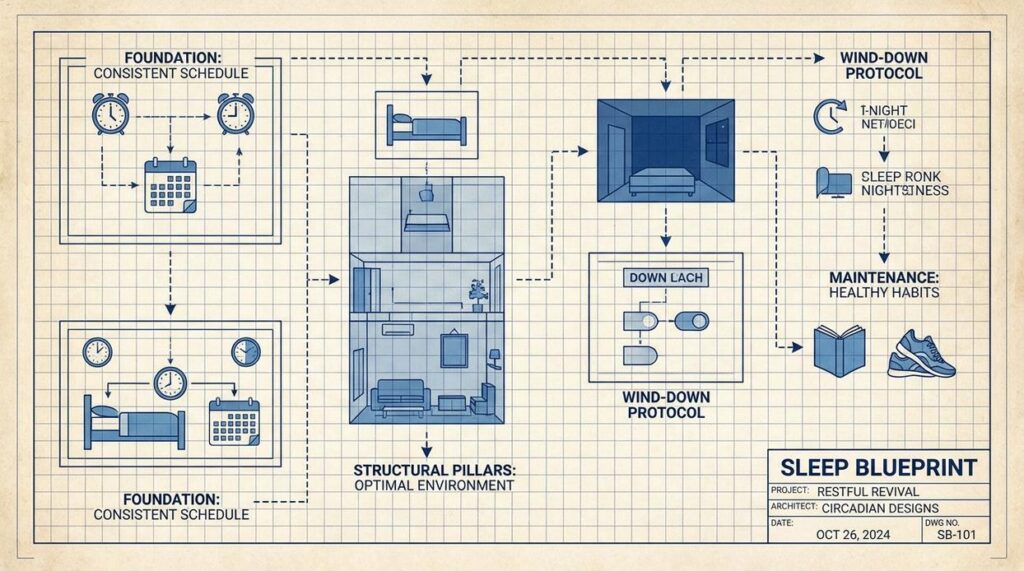
If you’re looking to improve your energy, performance, and overall well-being, it starts with understanding how your daily habits work together. From smarter training methods to targeted recovery protocols and practical nutrition shifts, small adjustments can unlock measurable gains. This article is designed to give you exactly that—clear, science-backed guidance you can apply immediately.
We break down holistic health principles, performance-focused fitness strategies, and proven recovery techniques that help you train harder while avoiding burnout. You’ll also discover simple daily exercise hacks and sleep optimization strategies that support muscle repair, hormone balance, and sustained focus.
Our insights are grounded in current exercise science, peer-reviewed research, and evidence-based wellness practices used by performance professionals. Whether your goal is better endurance, faster recovery, or improved day-to-day vitality, this guide delivers practical, trustworthy advice to help you move, feel, and perform at your best.
Unlock Your Best Self
You spend eight hours in bed, yet wake up exhausted. Frustrating, right? The issue isn’t just duration; it’s sleep quality—the depth and efficiency of your rest cycles.
Most advice repeats basics. We go further, combining physiology, recovery science, and real-world performance data to deliver practical sleep optimization strategies you can apply tonight.
Here’s the framework:
- Audit light, temperature, and nervous system load before bed.
We focus on measurable biomarkers, circadian alignment, and targeted wind‑down protocols competitors overlook. Expect science-backed, immediately actionable steps that restore energy, sharpen focus, and finally make mornings feel effortless every single day.
Crafting the Perfect Sleep Sanctuary: Your Bedroom Environment
Your bedroom should feel less like a storage unit and more like a cave designed for recovery. If sleep is biological, your environment should respect biology.
Darkness
Melatonin—the hormone that signals your body it’s time to sleep—rises when light drops (National Sleep Foundation). Even small LED lights can suppress it. Use blackout curtains, cover electronic indicators, and wear a contoured eye mask if needed. Total darkness isn’t dramatic; it’s effective. (Yes, even that tiny charger light matters.)
Temperature
Research shows the ideal sleep range is 60–67°F (15–19°C) (Sleep Foundation). A cooler room supports your body’s natural temperature drop, which initiates sleep. Lower the thermostat, use breathable sheets, or try a cooling mattress topper. Pro tip: warm shower before bed accelerates the cool-down effect afterward.
Sound
Noise fragments sleep—even if you don’t fully wake up. Earplugs block sudden disruptions, while white noise machines smooth out environmental spikes by creating consistent background sound. Think of it as an audio blanket.
Comfort
A supportive mattress and position-specific pillow prevent micro-awakenings caused by discomfort. Side sleepers need thicker support; back sleepers need alignment-focused cushioning.
Treat your bedroom as the foundation of your sleep optimization strategies—and design it accordingly.
Your Daily Habits: The Blueprint for a Great Night’s Sleep
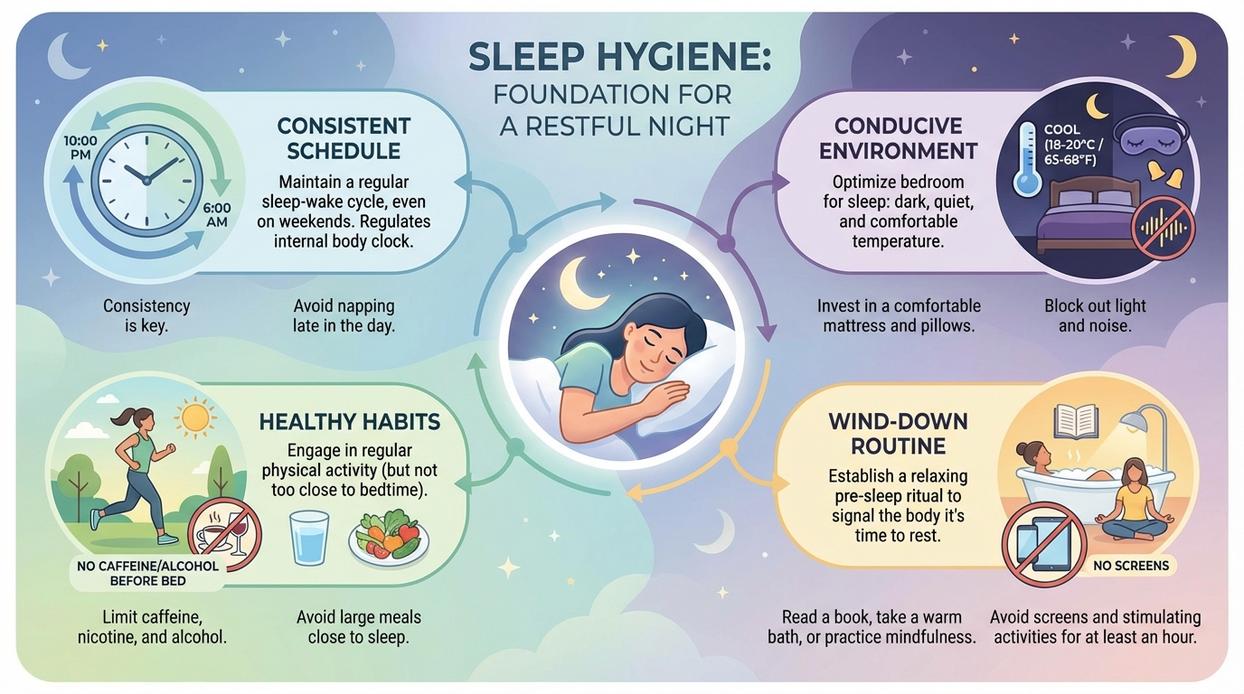
Great sleep doesn’t start at bedtime. It starts the moment you wake up.
Consistent Sleep Schedule
A circadian rhythm is your body’s 24-hour internal clock that regulates sleep, energy, hormones, and even digestion. When you wake and sleep at the same time daily—even on weekends—you reinforce that rhythm. Back in 2019, researchers found that irregular sleep schedules were linked to poorer metabolic health (Sleep, 2019). After just two weeks of consistent timing, many people report falling asleep faster and waking up clearer (yes, even before coffee).
Some argue that “catching up” on weekends fixes everything. It doesn’t. Large swings in sleep timing create social jet lag—a mismatch between your biological clock and actual schedule.
Strategic Light Exposure
Morning sunlight is a powerful cue. Within 30–60 minutes of waking, get 5–15 minutes of bright outdoor light. This suppresses melatonin (your sleep hormone) and boosts alertness. At night, dim lights 60 minutes before bed. Bright LEDs tell your brain it’s noon in July (even if it’s 10:30 PM in February).
The Wind-Down Routine
Create a 30–60 minute ritual: read a physical book, stretch gently, or listen to calm music. Think of it as powering down a laptop—your brain needs a buffer.
Caffeine and Alcohol Rules
No caffeine after 2 PM. Its half-life is about 5–7 hours (FDA). Alcohol may sedate you initially, but it fragments REM sleep—the stage tied to memory and mood (National Institute on Alcohol Abuse and Alcoholism).
These small, consistent habits form practical sleep optimization strategies. For more foundational wellness habits, explore riding the wellness wave 7 science backed habits for a healthier life.
Fueling for Rest
Most people obsess over blackout curtains and supplements, yet ignore the obvious: your daytime habits decide your nighttime rest. Daily movement builds “sleep pressure” (the biological drive to sleep that rises the longer you’re awake). A brisk walk, strength session, or cycling commute can deepen slow-wave sleep, according to the Sleep Foundation. But here’s the contrarian twist: crushing a high-intensity workout at 9 p.m. isn’t “discipline”—it’s sabotage. Elevated cortisol and core temperature can delay melatonin release. Keep tough sessions 2–3 hours before bed.
Evening nutrition deserves equal scrutiny. Heavy, spicy dinners close to lights-out trigger reflux and fragmented sleep. If you’re genuinely hungry, try a small carb-protein snack—think oats with yogurt—to stabilize blood sugar overnight.
Sleep-supporting foods include:
- Magnesium sources like leafy greens and almonds (muscle relaxation)
- Tryptophan-rich options such as turkey and oats (serotonin precursor)
- Tart cherries for natural melatonin
Hydrate generously during the day, then taper fluids 1–2 hours before bed to reduce awakenings. Pro tip: front-load water before 6 p.m.
Trendy sleep optimization strategies won’t outperform consistent basics. Move daily, eat mindfully, and respect your circadian rhythm (yes, it’s that simple). Consistency beats hacks, every single night. Protect your wind-down routine.
Calming the Racing Mind: Techniques to Overcome Sleeplessness
When your thoughts won’t clock out (cue the late-night Taylor Swift “it’s me, hi” moment), it’s time to gently shift gears. First, try the 4-7-8 breathing method—a technique designed to activate the parasympathetic nervous system, your body’s “rest and digest” mode. Inhale through your nose for 4 seconds, hold for 7, then exhale slowly for 8. Repeat four cycles. Slower breathing signals safety to the brain, easing anxiety.
Next, consider a 10-minute “brain dump.” Write down worries or tomorrow’s to-do list. By externalizing mental clutter, you reduce cognitive arousal (that mental buzz keeping you up).
However, if you’re still awake after 20 minutes, follow the 20-Minute Rule. Get up, keep lights dim, and do something calm—reading, stretching—until sleepy. This breaks the bed-anxiety link.
Together, these sleep optimization strategies retrain your mind to see bedtime as rest, not rehearsal.
You’re here because chronic fatigue has been winning. Good news: the answer isn’t a magic pill, but four pillars—environment, habits, nutrition, and mindset. Think A vs. B: scrolling under bright lights at midnight, or dimming the room and setting a wind-down cue. One drains; the other restores. Likewise, inconsistent bedtimes versus steady rhythms create very different mornings. However, real change comes from small, repeatable shifts, not heroic overhauls. So, choose one tactic from these sleep optimization strategies and use it tonight. After all, sleep isn’t passive; it’s your most powerful recovery tool for peak performance and lasting well-being each day.
As more individuals prioritize sleep optimization as a cornerstone of their wellness routines, understanding how external factors like stress and lifestyle choices, which are discussed in our article ‘How Homorzopia Spreads,’ can disrupt sleep is becoming increasingly crucial.
Take Control of Your Recovery and Performance Today
You came here looking for practical ways to improve your recovery, boost performance, and feel better in your body each day. Now you have a clear path forward—from smarter training adjustments to targeted recovery techniques and sleep optimization strategies that actually make a difference.
Ignoring fatigue, poor sleep, or inconsistent routines only leads to stalled progress and frustration. The real pain point isn’t lack of effort—it’s not having a system that supports your body’s natural recovery and performance cycles.
The solution is simple: apply what you’ve learned consistently. Prioritize recovery as much as training. Implement daily exercise hacks that fit your schedule. Dial in your sleep optimization strategies so your body can rebuild stronger overnight.
If you’re ready to stop guessing and start seeing measurable improvements, now is the time to act. Explore more expert-backed performance and recovery insights, apply one strategy today, and build momentum. Thousands are already transforming their health with proven, holistic methods—start now and feel the difference for yourself.
 Lisalmilba Marquez has opinions about daily exercise hacks. Informed ones, backed by real experience — but opinions nonetheless, and they doesn't try to disguise them as neutral observation. They thinks a lot of what gets written about Daily Exercise Hacks, Fitness Performance Strategies, Holistic Health Foundations is either too cautious to be useful or too confident to be credible, and they's work tends to sit deliberately in the space between those two failure modes.
Reading Lisalmilba's pieces, you get the sense of someone who has thought about this stuff seriously and arrived at actual conclusions — not just collected a range of perspectives and declined to pick one. That can be uncomfortable when they lands on something you disagree with. It's also why the writing is worth engaging with. Lisalmilba isn't interested in telling people what they want to hear. They is interested in telling them what they actually thinks, with enough reasoning behind it that you can push back if you want to. That kind of intellectual honesty is rarer than it should be.
What Lisalmilba is best at is the moment when a familiar topic reveals something unexpected — when the conventional wisdom turns out to be slightly off, or when a small shift in framing changes everything. They finds those moments consistently, which is why they's work tends to generate real discussion rather than just passive agreement.
Lisalmilba Marquez has opinions about daily exercise hacks. Informed ones, backed by real experience — but opinions nonetheless, and they doesn't try to disguise them as neutral observation. They thinks a lot of what gets written about Daily Exercise Hacks, Fitness Performance Strategies, Holistic Health Foundations is either too cautious to be useful or too confident to be credible, and they's work tends to sit deliberately in the space between those two failure modes.
Reading Lisalmilba's pieces, you get the sense of someone who has thought about this stuff seriously and arrived at actual conclusions — not just collected a range of perspectives and declined to pick one. That can be uncomfortable when they lands on something you disagree with. It's also why the writing is worth engaging with. Lisalmilba isn't interested in telling people what they want to hear. They is interested in telling them what they actually thinks, with enough reasoning behind it that you can push back if you want to. That kind of intellectual honesty is rarer than it should be.
What Lisalmilba is best at is the moment when a familiar topic reveals something unexpected — when the conventional wisdom turns out to be slightly off, or when a small shift in framing changes everything. They finds those moments consistently, which is why they's work tends to generate real discussion rather than just passive agreement.